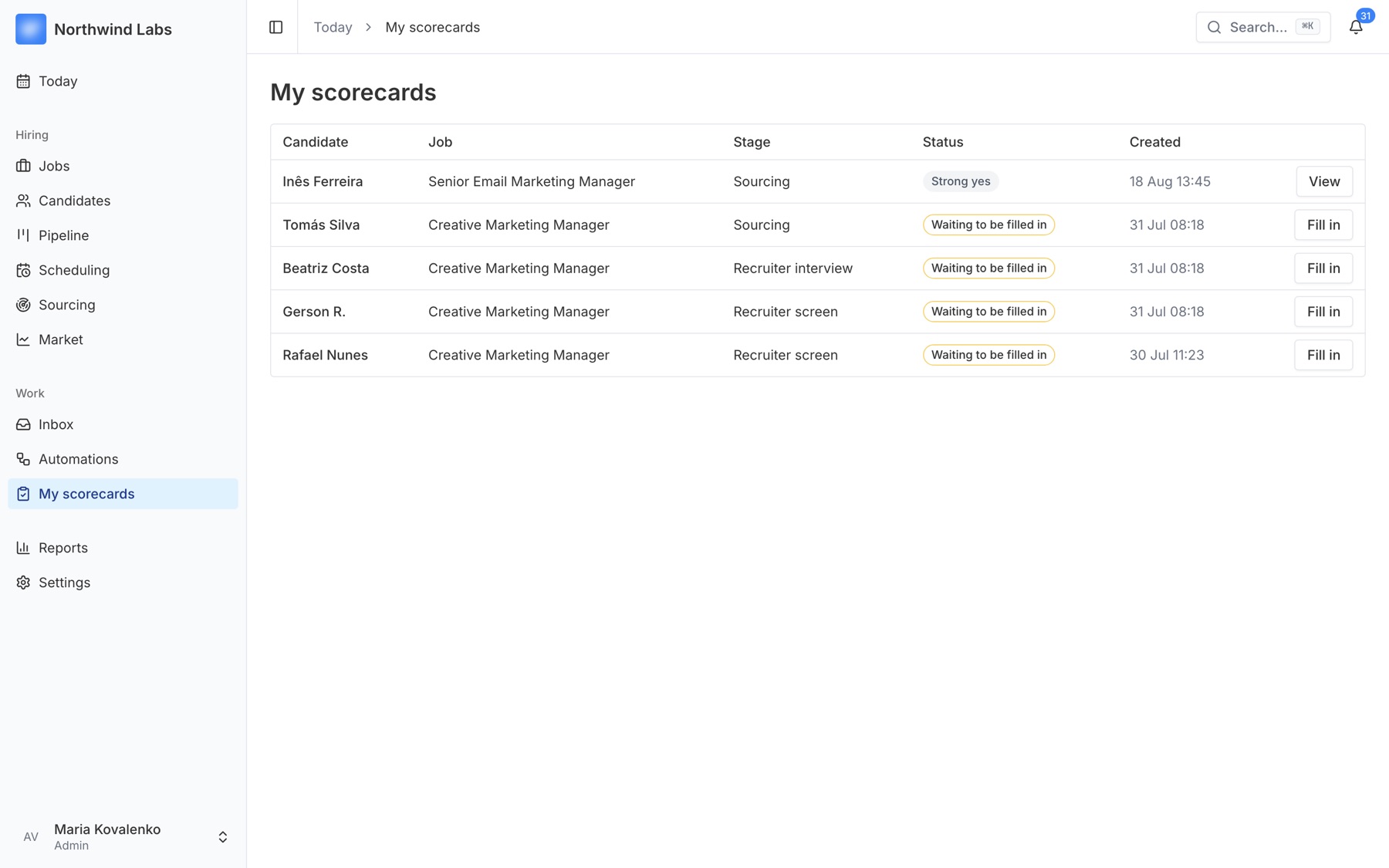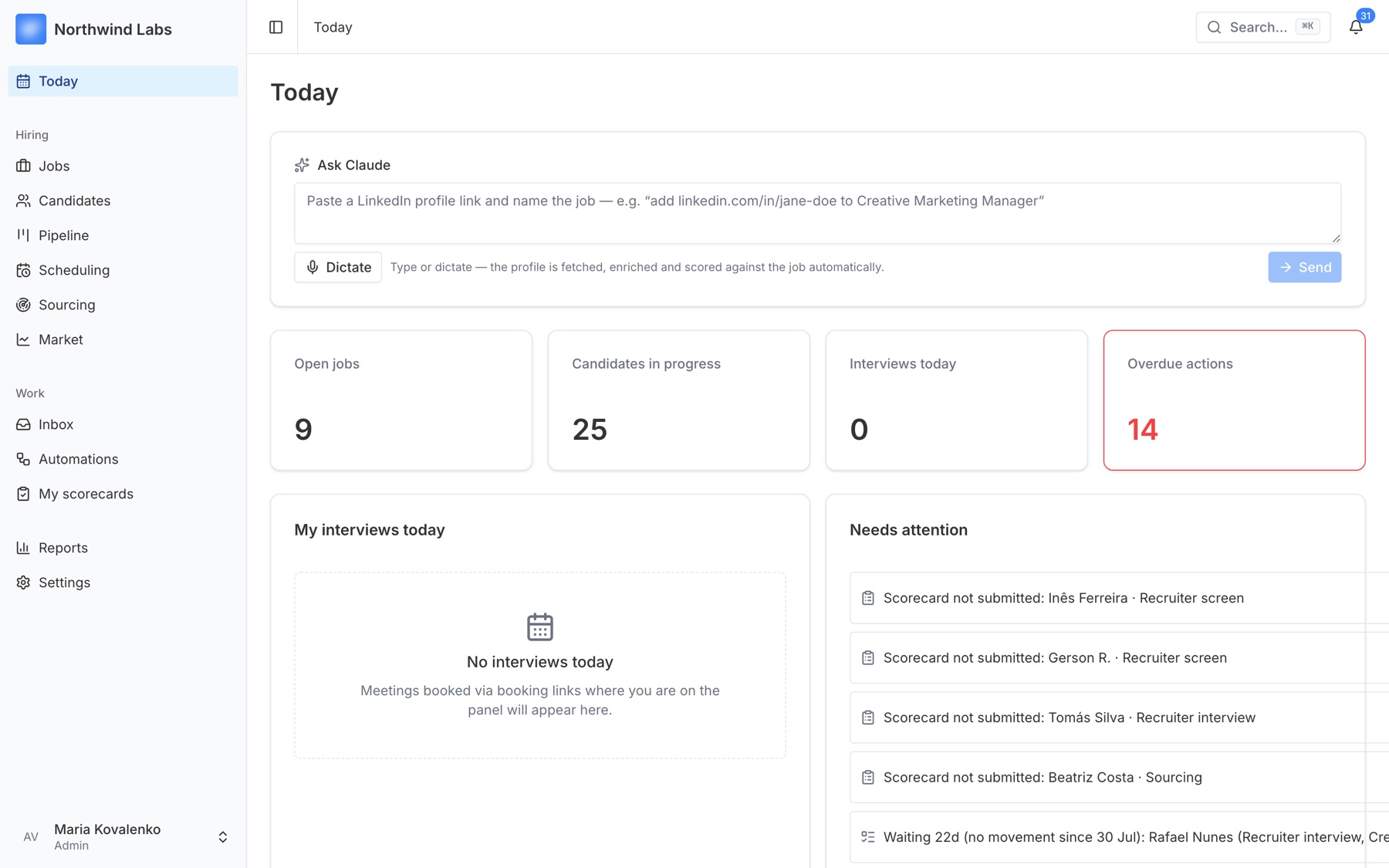
Record a short voice note after the call. It becomes a filled-in scorecard in your rubric, with the exact words that justify each rating. You read, adjust, submit.


Interviewers who dictate submit the same afternoon. Richer notes, fewer “I think it went fine”.
Ashby: AI notes give 44% more content in scorecards
No quote, no rating. If the interviewer never talked about mentoring, the box says “not assessed”, not a guess.
Now you can see it: who is strict, who is lenient, and where a second look is needed.
Ashby

What this round assesses, the must-haves, the deal-breaker, and what previous rounds already covered. Fresh context beats a long prep.
A gentle reminder after 2 hours, again at 5, next morning, then the hiring manager hears about it. You never have to nag.
Each interviewer's strictness compared with the panel. A one-point gap on the same candidate is flagged for a conversation.
How many hours each person spent interviewing this month, so the load is shared and leadership sees the real cost of a hire.
Submit a “no” and a kind rejection with real feedback is drafted. Submit a “yes” and the next-steps note is ready. You approve before anything goes out.
The note fills a draft. A person presses Submit. That press is your record that a human reviewed the AI.
No reading the candidate's emotions, no scoring their voice or face, no mandatory one-way video interviews. These are banned or high-risk under the EU AI Act, and candidates walk away from them.
We started with your own voice notes because recording yourself needs no consent form. Full-call transcription can be added when your legal team says yes.

A 30-minute session: we set up the role, run a first search, and turn one of your interview notes into a finished scorecard.