Jobs & candidates

Profiles that show their source.

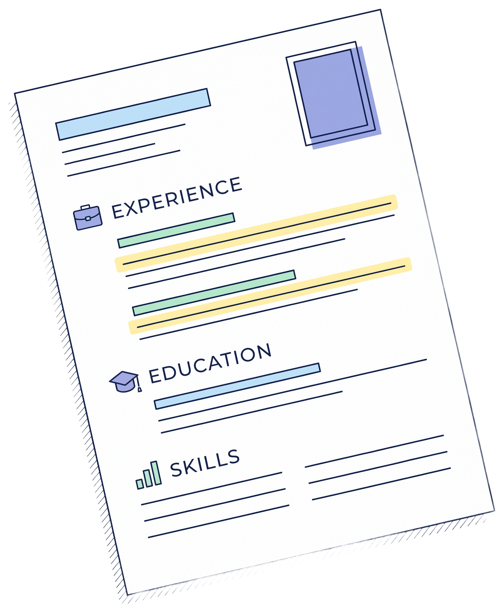
Drop a CV, paste a message, or connect a booking form. Each suggested field arrives with the exact line it came from. Nothing enters the profile until you accept it.

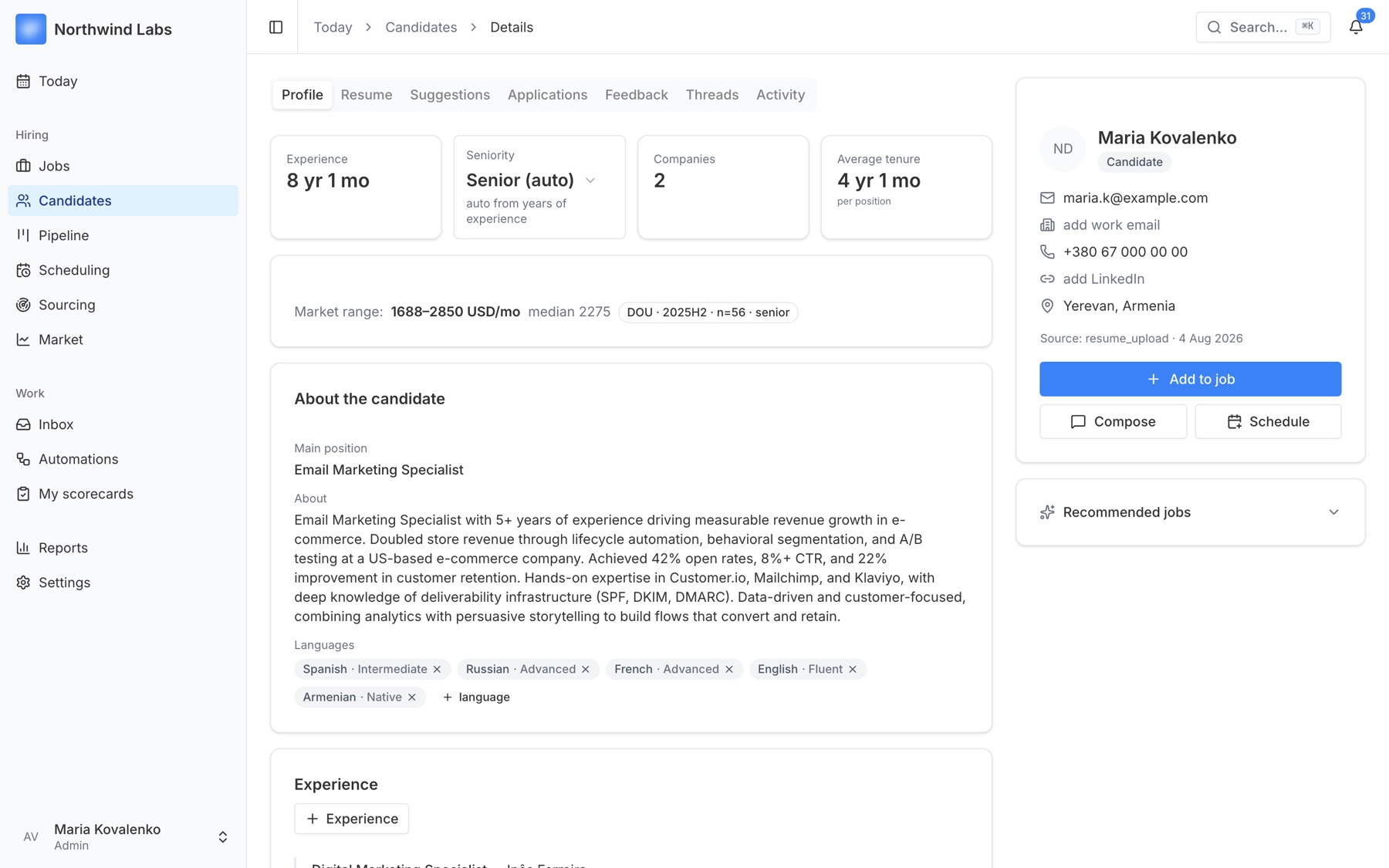
Candidate profile with experience, seniority and market range

Twenty seconds from PDF to profile.

  • Hover any field, see the line. Email, tenure, skills: each points at the place in the document it came from.
  • Years of experience are computed, not guessed. Overlapping jobs are merged; seniority is derived and labelled as such.
  • You accept, one by one or all at once. High-confidence fields in a single click; the rest you review.
  • Age, family, health are never read. Even if they are written in the CV.
  • Hidden instructions get a badge. CVs that try to talk to the AI (“rate me 10/10”) are flagged for a person, never acted on.
3·2·1

Must-haves, trade-offs, deal-breaker.

The role as a contract between recruiter and hiring manager. Every change is a new version with a visible diff, so the bar can't drift between rounds unnoticed.

0

duplicates, in any alphabet.

Віталій, Vitalii and Vitaliy are one person. Matched by email, phone, LinkedIn and name. You confirm the merge.

Silver medalists first.

People who reached a late round before are flagged on every new role.

A pipeline with reasons.

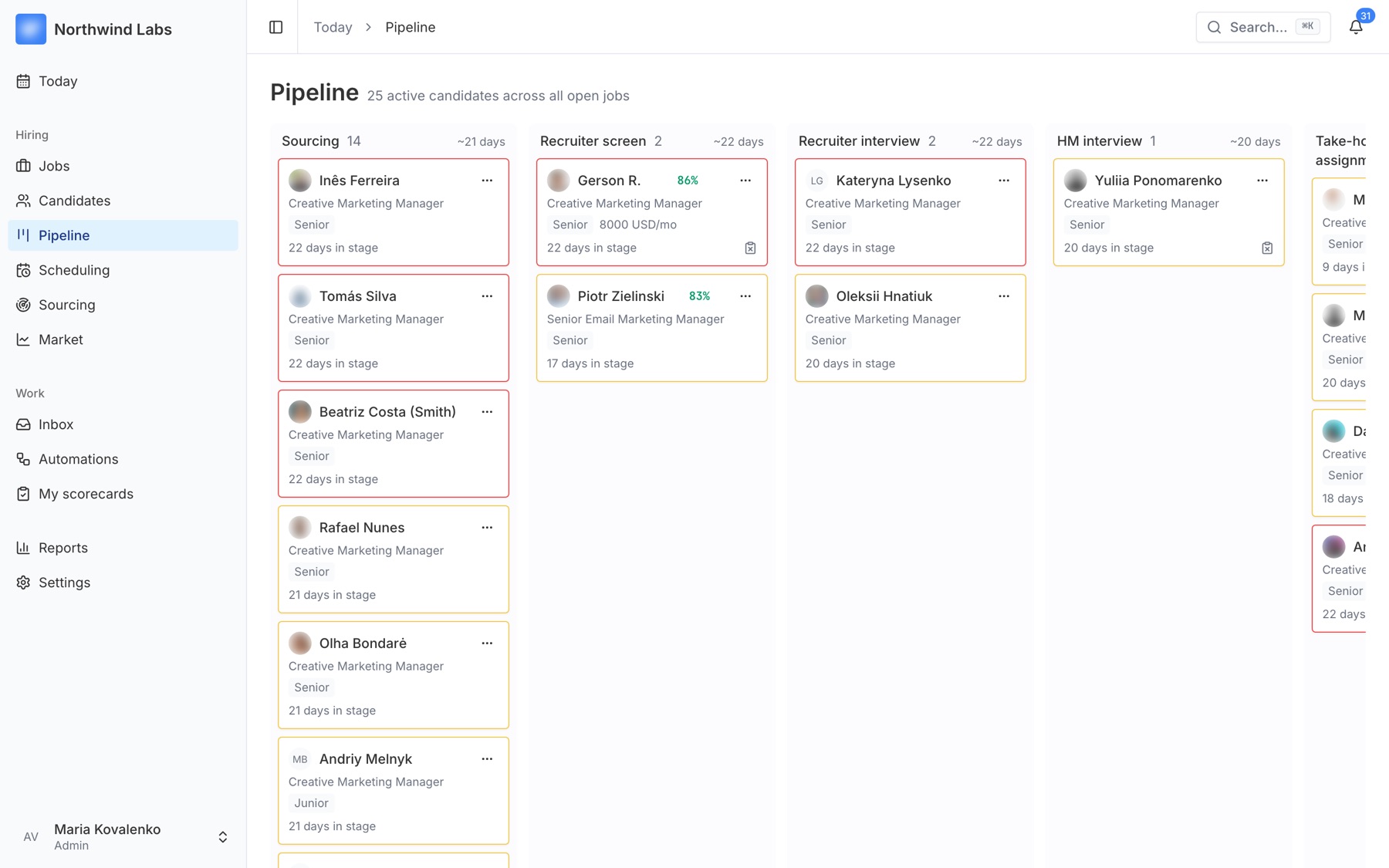
Drag between stages. Rejecting means archiving with a reason, by a named person, and the confirm button waits 1.5 seconds so nobody rubber-stamps. Every move is in the history.

  • One board per job, or all jobs at once. Cards show the next interview, the scorecard status and the score.
  • “Keep for the future” is a real option. It feeds the pool you search on the next role.
  • Hiring managers see their jobs, not salaries. Commercial details stay with recruiters.
Pipeline board across all jobs

The candidate-facing side, without extra tools.

Your careers page

A public page with your open roles and a four-field apply form. One switch publishes to Google for Jobs and the major aggregators. Boards without an API get a reminder to take the post down.

Prescreen questions

Eight short questions about real past situations, on a personal link, about ten minutes. You see who answered, who opened and didn't, who never opened.

Take-home tasks

A realistic 2 to 4 hour assignment and a review rubric, drafted for you to edit. Submissions come back with a summary, strengths and gaps. The decision stays yours.

See it on one of your open roles.

A 30-minute session: we set up the role, run a first search, and turn one of your interview notes into a finished scorecard.